Trip to the city center
The 1GI, geoinformation technicians, took a trip to the city center to research history and architecture of Vienna’s heart. After a short break, they headed to the escape room on Mariahilfer Straße and visited the Naturhistorische Museum. Great day!
Patrick Haider:
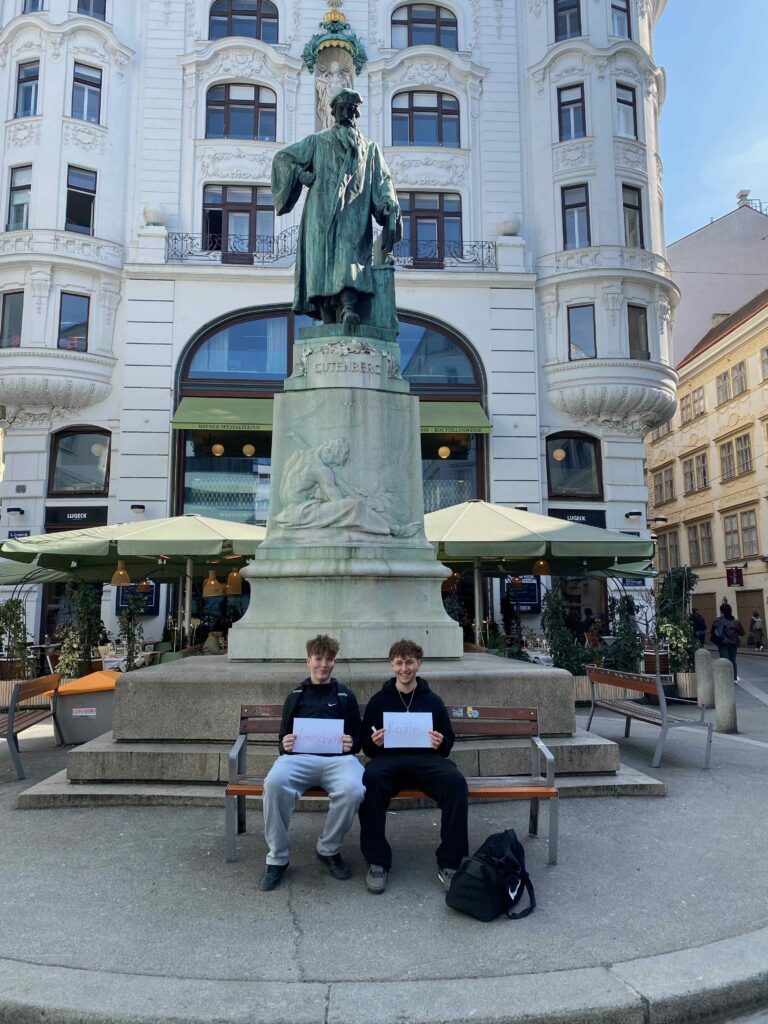
Our school trip in Vienna’s first district was a great opportunity to discover several historical and cultural places in the city center, During this excursion we learned many interesting things about Vienna’s past, its architecture, and some famous personalities connected to the city. One of the most impressive places we visited was St. Stephen’s Cathedral. This cathedral is one of the most well-known landmarks of Vienna. The huge Gothic building immediately caught our attention, especially the color ful roof tiles that form beautiful patterns. Our teacher also told us about the long history of the cathedral and explained why it plays such an important role in Vienna’s culture and history. During our trip we also stopped at the statue of Johannes Gutenberg. There our teacher told us a little about his life and why he is so important in history. Gutenberg was a German inventor who lived in the 15th century. He is famous for inventing the printing press with movable type. Because of his invention, books could be produced much faster and cheaper than before. This helped knowledge spread across Europe and made it easier for people to learn and share information. Standing in front of the statue, we talked about how important his invention was for education, science, and communication. Another place we stopped at during our walk through the city was St. Peter’s Church. This church is a wonderful example of baroque architecture. When we went inside, we saw many detailed decorations, paintings, and artistic elements. The interior of the church looked very impressive and showed how important religious buildings were in earlier times. While exploring the city center, we also walked along Graben, which is one of Vienna’s most famous streets. Today it is known for its many shops and cafes, but it is also surrounded by historic buildings. Along this street we stopped at the Pestsäule, also called the Plague Column This monument was built in the 17th century after a terrible plague epidemic ended. Our teacher explained the story behind the monument and the meaning of the sculptures that decorate it. During the trip we also visited the house where the famous composer Wolfgang Amadeus Mozart once lived. Even though we did not go inside the building, we still learned some interesting facts about his life and his connection to Vienna. Mozart is still one of the most important composers in classical music, and the city is strongly connected to his legacy. Overall, the walk through Vienna’s city center was very interesting. It helped us understand more about the history of the city and the importance of its historical buildings.
Sebastian Klaus:
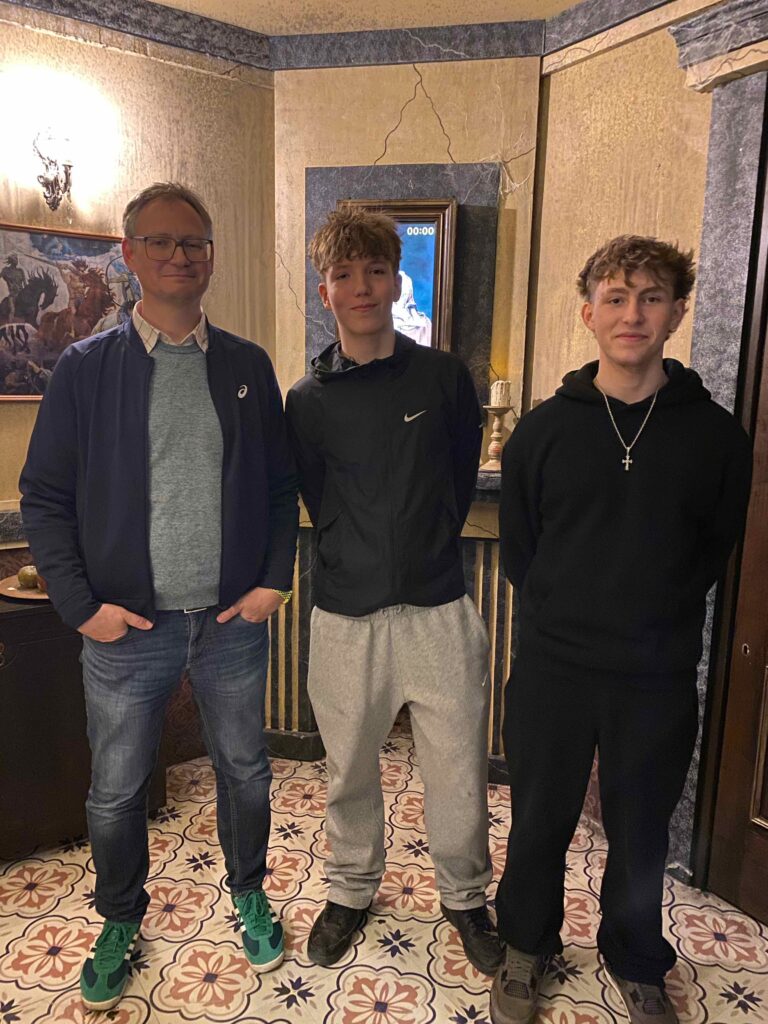
During our class trip to Vienna, we had the opportunity to explore several important historical and cultural sites in the city center. Our visit started at St. Peter’s Church, one of the most beautiful Baroque churches in the city. Inside, we admired the impressive architecture, decorations, and artwork that make the church a significant landmark. After visiting the church, we walked along the famous Graben. This is one of Vienna’s most well-known shopping streets and is surrounded by historic buildings and cafés. Along the way, we stopped to look at the Pestsäule, also known as the Plague Column. This monument was built to commemorate the end of the plague epidemic in the 17th century. Our teacher explained its historical importance and the meaning behind the sculptures. Next, we visited St. Stephen’s Cathedral, one of the most famous landmarks in Vienna. The cathedral impressed us with its large Gothic structure. We learned about the history of the cathedral and its importance to the city. Our next stop was Mozarthaus Vienna, where the famous composer Wolfgang Amadeus Mozart once lived. We didn’t visit the Museum unfortunately but we were still able to learn about the topic. Later, we went to an escape room on Marlebilter Streße that was themed like an old. haunted hotel. We had to work together to solve puzzles and find clues in order.to escape the room before the time ran out. It was a very exciting and fun experience for our class. After that, we visited the Natural History Museum Vienna. There we learned about many fascinating topics, including dinosaurs, gold, crystals, and many other natural wonders. The exhibitions were very interesting, which made it more fun to learn about the many different things. Overall, the trip was very interesting and helped us learn more about Vienna’s history, architecture, and science.
Texts: Jürgen Neckam, Patrick Haider, Sebastian Klaus. Pictures: Jürgen Neckam.